Unlocking the Symphony: Perfect Pitch in Everyone
In the quest to understand the remarkable phenomenon of perfect pitch, often referred to as color hearing, it's common to marvel at the abilities of those who possess it, wondering how they achieved such a feat. This skill, seems akin to being able to name a color without seeing it. While many stand in awe of this ability, pondering on the 'how,' an interesting approach might be to ask, 'why not everyone?' This shift in perspective opens up a fascinating dialogue about the inherent capabilities of the human mind, drawing significantly from the principles outlined by Jeffrey M. Schwartz in his seminal work, "The Mind and the Brain," particularly regarding the concept of neuroplasticity in adults.
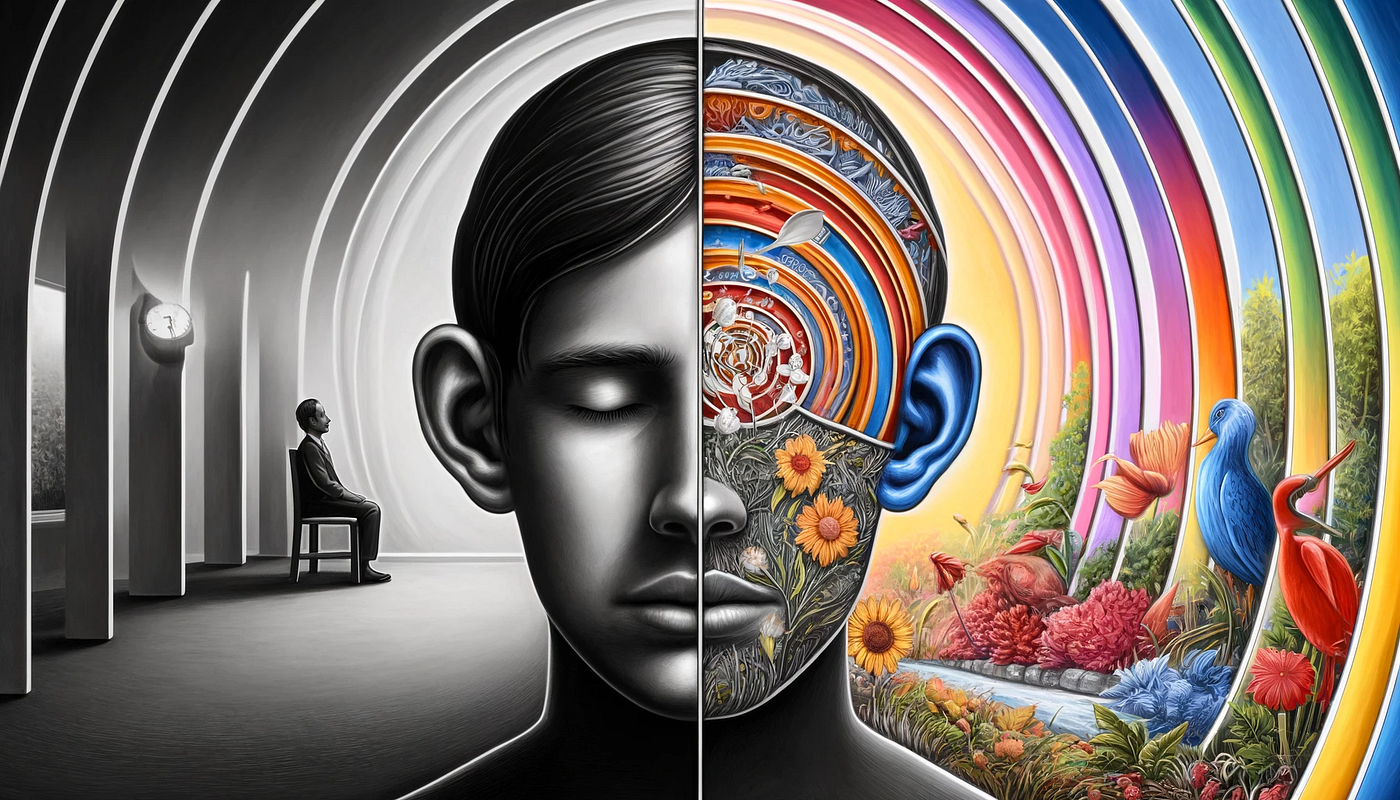
The prevailing view in neuroscience is that certain skills, including perfect pitch, are rarities, bestowed upon a select few through a combination of genetic fortune and early exposure. However, this viewpoint may be too simplistic and limiting. If we consider Schwartz's argument, the human brain possesses a remarkable capacity for change and adaptation, known as neuroplasticity. This concept suggests that with the right stimuli and practice, it's possible to forge new neural pathways, essentially rewiring our brains to acquire new abilities.
Why, then, do not all individuals have perfect pitch? The answer may lie in the way human societies have evolved to prioritize sensory inputs. Humans are predominantly sight-oriented, relying heavily on visual stimuli to interact with the world around them. This reliance on sight has inadvertently led to a diminished focus on auditory skills like color hearing. Over generations, this lack of attention has resulted in what could be termed 'learned ignorance,' where the brain's potential to perceive sound in this rich, multidimensional way is overlooked and, therefore, underdeveloped.
This is not to say that the capability has vanished entirely. Instead, it suggests that, for most, this ability lies dormant, untapped due to societal and educational norms that do not encourage its development. The exciting news, however, is that through dedicated practice and attention-based neuroplasticity, it is possible to awaken these dormant abilities. Neuroplasticity allows the brain to adapt and grow, meaning that with the right approach, individuals can cultivate the skills necessary for perfect pitch.
Engaging in targeted auditory training, mindfulness practices, and immersive musical education can act as stimuli for neuroplastic change, strengthening the neural networks associated with color hearing. This process is like learning a new language or instrument — it demands patience, practice, and, most importantly, a belief in the brain's capacity to grow.
The question of why everyone doesn't have perfect pitch is not just rhetorical; it invites a deeper exploration into the capacities of the human brain and the untapped potential that lies within each of us. By shifting our focus from a fixed mindset that views such abilities as rare gifts to a growth-oriented perspective that sees them as achievable through neuroplasticity, we can unlock a world where the symphony of colors and sounds becomes accessible to many more individuals. This paradigm shift not only enriches our understanding of human cognition but also opens up new avenues for educational and developmental practices that harness the full spectrum of our sensory abilities.