The concept of “color hearing” — the ability to perceive musical notes as distinct, unique qualities, much like seeing colors — is a topic of intense debate. Some people claim that color hearing is real and can be developed, while others dismiss it as imaginary or limited to synesthesia. This debate highlights a fundamental truth about human perception: it is deeply personal, subjective, and not easily reconcilable between different individuals.
Perception is Relative
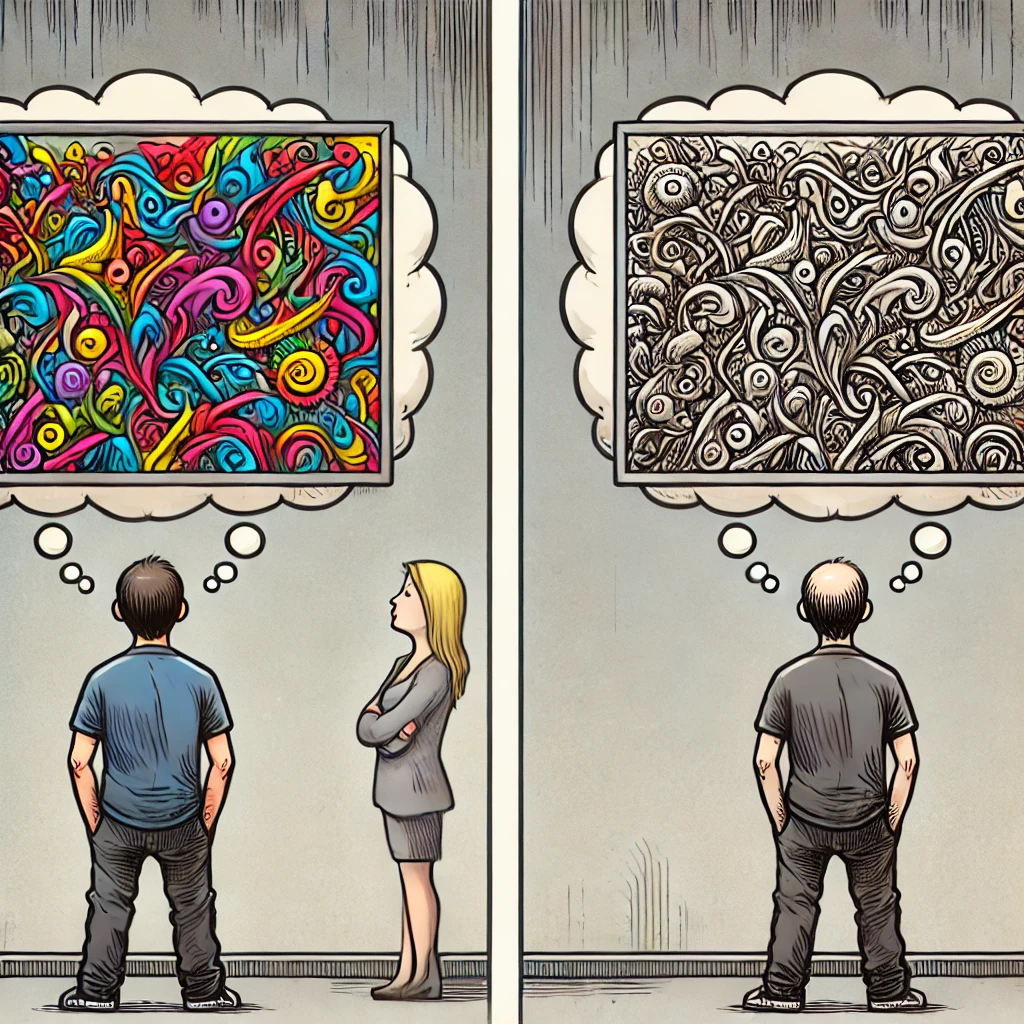
Perception, whether visual, auditory, or otherwise, is relative to the individual experiencing it. This relativity means that two people can have entirely different experiences of the same phenomenon, and both be correct from their respective perspectives. In the case of color hearing, someone who experiences notes as having distinct “colors” may genuinely perceive musical pitches in a way that feels as real and obvious as distinguishing red from blue. Conversely, a person who has never experienced this might find the very idea implausible.
Interestingly, for those who have always had color hearing, this state can feel natural and unremarkable, making it difficult to understand the experience of someone who has never known it. Similarly, those who have never experienced color hearing can’t truly relate to what they are missing, much like trying to describe the concept of color to someone who has been blind since birth. This creates an impasse in the debate: each side argues from a valid standpoint, yet neither can fully grasp the other’s reality.
This debate over whether color hearing exists can seem irreconcilable because of these fundamental differences in perception. Only those who have experienced the transition from hearing notes as mere pitches to perceiving distinct qualities of color can truly compare the two. They alone can speak to the shift in their experience of sound, often describing it as similar to unlocking a new layer of reality. This newfound ability allows them to interact with and appreciate music in ways that were previously inaccessible. It underscores the idea that perception is not fixed but can be expanded through conscious effort and practice.
The Possibility of Learning Perfect Pitch
This debate extends to the broader discussion about the learnability of perfect pitch. Many people are very opinionated on this topic, with some adamantly believing that perfect pitch is an innate talent that cannot be developed. However, there is a growing body of research that demonstrates this ability can indeed be learned, even if the process can be quite effortful.
It’s entirely reasonable for someone to decide that learning perfect pitch is not worth their effort or that it does not hold value for them personally. As our understanding of human perception and neuroplasticity grows, it becomes increasingly clear that abilities once thought to be fixed, like perfect pitch, can be cultivated. The real challenge lies not in whether it is possible, but in whether individuals believe it’s possible and are willing to invest the time and effort required to develop it.

The debate over color hearing and learning perfect pitch exemplifies the broader issue of how we understand and value different perceptions. It serves as a reminder that our experiences are inherently subjective and that just because something is outside our personal experience does not mean it is beyond the realm of possibility. Arguably, the true “winners” in this debate are those who embark on expanding their perceptual abilities, unlocking new layers of experience and appreciation along the way. Unlock your musical potential with HarmoniQ as your guide to developing perfect pitch and experiencing music in a whole new way.